From “Cheeky Blonde Kid” to Hollywood Legend: How Leonardo DiCaprio’s Early Rejections Shaped a Global Icon
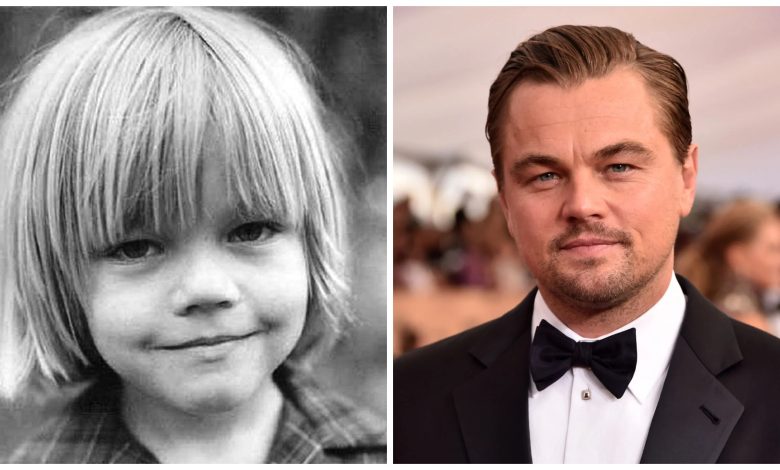
Leonardo DiCaprio is often seen today as one of the most influential faces in modern cinema, but the story shared in a recent feature paints a different starting point: a lively, messy-blond kid growing up in a tough Los Angeles neighborhood, surrounded by daily signs of chaos—noise, graffiti, and crime—yet standing out for his personality and magnetism.
Teachers reportedly described young Leonardo as “restless, funny, and unusually charismatic,” and his parents noticed early that he had a natural pull toward performing—cracking jokes, mimicking TV characters, and pushing hard to audition for commercials.

Early ambition, early rejection, and the traits that later became his brand
The account emphasizes that DiCaprio’s rise was not instant. He faced repeated “no’s,” including feedback from casting directors who allegedly felt he was “too expressive” and “too unconventional.” In the irony that defines many great success stories, those same qualities later became part of what made him unforgettable on screen.
Key ideas highlighted in the story:
- He wanted to perform from a very young age and actively chased auditions.
- He was rejected many times, not because he lacked energy, but because he stood out too much.
- His “unconventional” presence eventually became an advantage, not a flaw.

The turning point: a “big break” and proof he was more than a cute kid
The feature points to “Growing Pains” as a major break, but stresses that “This Boy’s Life” was the moment that proved his depth as a performer—showing he could deliver more than charm.
One of the most striking claims in the piece is that Robert De Niro personally selected DiCaprio from hundreds of teenagers, saying he had “the spark.”
“Titanic” and the birth of a worldwide phenomenon
Then came the moment that transformed him from rising talent into global obsession: “Titanic.” According to the story, his role as Jack Dawson didn’t just make him famous—it made him a worldwide sensation, with intense fan reactions and nonstop media attention questioning whether he could handle it.
The article’s portrayal of that era emphasizes:
- A level of fame that went beyond typical celebrity
- Massive fan hysteria at premieres
- A public narrative of “Can he survive the spotlight?”—met with his calm confidence
Refusing the “poster boy” path: choosing elite filmmakers and serious roles
Instead of staying locked into shallow heartthrob status, the story says DiCaprio surprised people by building credibility through collaborations with top directors—specifically naming Quentin Tarantino, Christopher Nolan, and Martin Scorsese.
This was presented as a deliberate career move: turning fame into long-term respect by consistently taking demanding projects and working with filmmakers known for ambitious storytelling.
Activism behind the scenes: using fame as a platform, not a party ticket
A major part of the feature focuses on DiCaprio’s environmental advocacy, framing it as something he leaned into before it was trendy. Rather than using celebrity for constant nightlife, the story portrays him using visibility to push environmental issues—from the Amazon rainforest to the melting Arctic.
The article credits him with several high-impact actions:
- Donating millions through his charity toward conservation
- Speaking at the United Nations
- Making documentaries about climate change

The long-awaited award moment: “finally” winning an Oscar
After years of acclaimed work, the story says he ultimately received the Oscar that many fans felt he had been due since the 1990s—pointing to major performances “from The Aviator to The Revenant.”
Timeline of the rise described in the feature
- Childhood in Los Angeles, shaped by a rough environment, but marked by standout charisma
- Early auditions and multiple rejections for being “too expressive”
- Breakthrough via Growing Pains
- Credibility leap with This Boy’s Life, including De Niro’s reported praise: “the spark”
- Global superstardom through Titanic and the “worldwide sensation” era
- Reinvention through work with elite directors (Tarantino, Nolan, Scorsese)
- Parallel legacy as an environmental advocate (charity, UN, documentaries)
- Awards recognition culminating in an Oscar win after decades of major performances
Why the story resonates
The narrative lands on a simple message: the “then and now” isn’t just about growing up—it’s about transformation. The feature frames DiCaprio as someone who turned early rejection into identity, turned fame into craft, and used global attention to push causes beyond entertainment, becoming not only a Hollywood powerhouse but also a worldwide campaigner.