Found this in a house I moved into, block in the lower half is some type of metal. Clamshell case flocked in red.
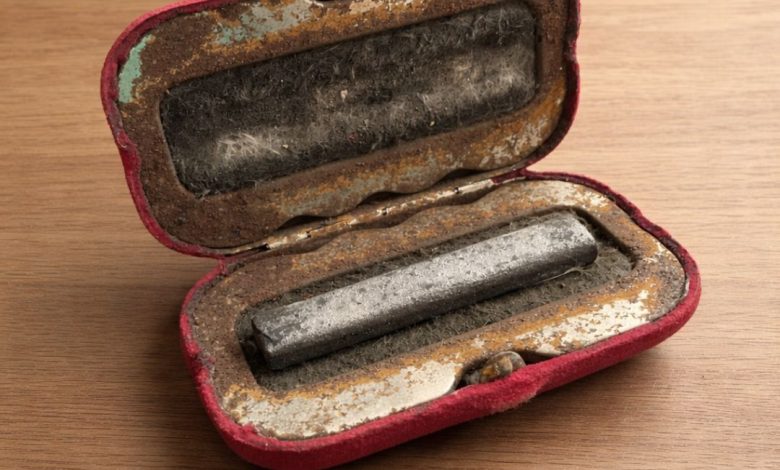
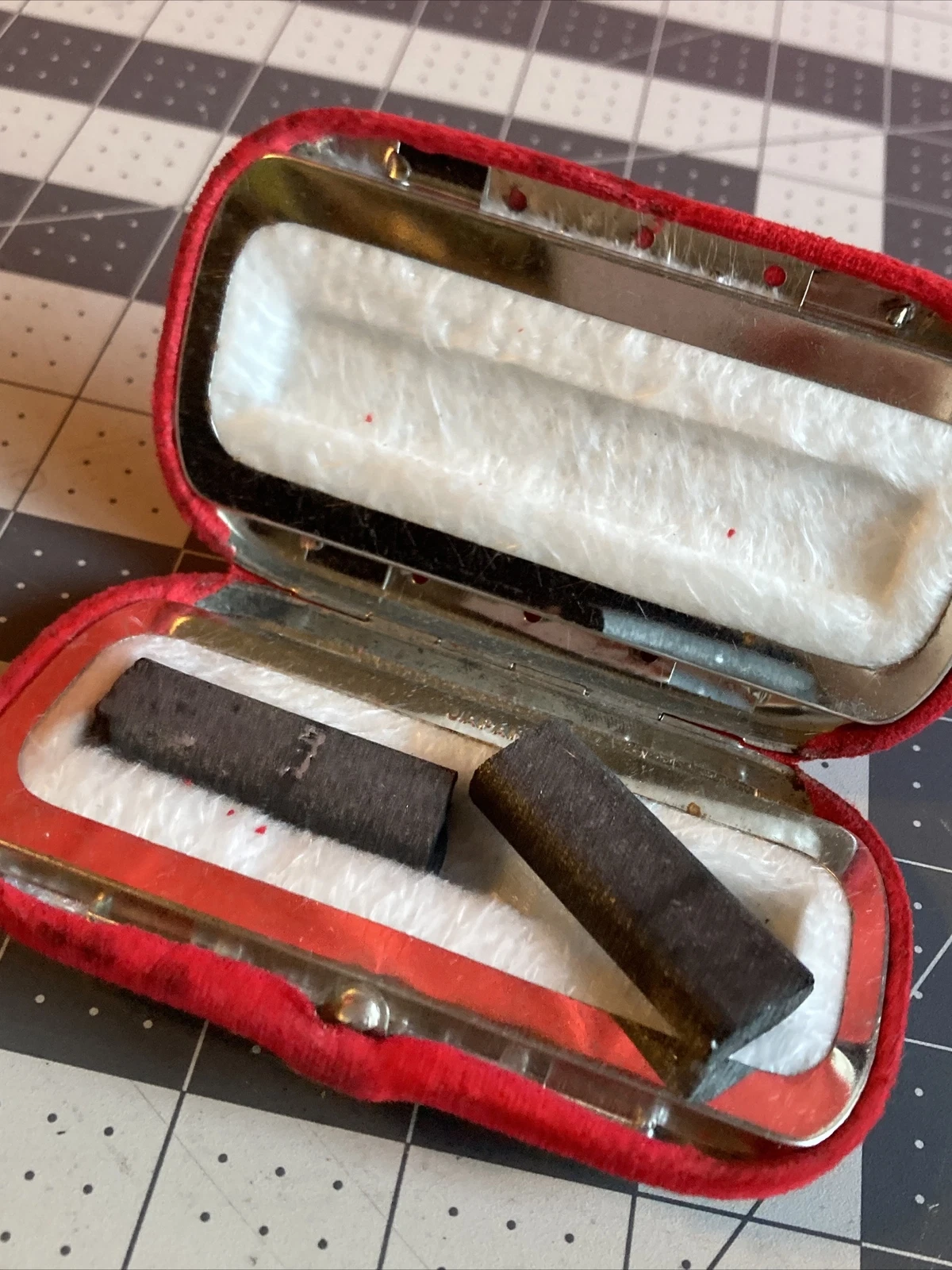
The photos show a vintage “PACIFIC HAND WARMER”—an emergency pocket hand warmer designed to produce gentle, portable heat using a charcoal fuel rod. The metal interior, felt lining, and the removable dark “stick” are all typical of charcoal-type pocket warmers.
Name and Identification
- Common name: Charcoal pocket hand warmer / Emergency pocket hand warmer
- Brand marking visible: PACIFIC HAND WARMER (gold text on red fabric)
- Country marking visible: JAPAN (stamped inside the metal frame)
- Key component: Charcoal fuel rod (the dark rectangular stick stored inside)
When It Appeared (Time Period)
- Charcoal pocket warmers became widely used in the late 1800s to early 1900s, especially in Japan, where compact personal warmers were produced at scale.
- Branded, export-style models like the one shown (cloth-covered case, stamped country of origin) were particularly common in the early to mid-20th century (roughly 1920s–1960s).
- Based on the “JAPAN” stamp and the overall construction, the Pacific model is most consistent with that mid-1900s consumer period.

Who Created It (Origin and Maker)
- The concept of the charcoal pocket hand warmer was developed and refined by Japanese manufacturers as a practical winter accessory long before modern disposable heat packs existed.
- This specific unit is branded “Pacific Hand Warmer,” but the photos do not show a manufacturer’s full company name—so it is best described as a Japan-made, Pacific-branded charcoal pocket hand warmer, produced as part of a wider category made by multiple firms.
What It Was Used For (Primary Purpose)
- Warming hands in cold weather while outdoors, commuting, working, hunting, attending events, or traveling
- Serving as an emergency heat source in pockets, gloves, or small bags
- Providing localized warmth without electricity or batteries
How It Works (Simple Explanation)
This type of warmer produces heat by allowing a charcoal rod to smolder slowly with limited airflow. The case is designed to:
- Hold the fuel rod in a protected channel
- Use felt lining to insulate and distribute heat more evenly
- Allow controlled oxygen so the rod stays hot longer instead of burning quickly
Main Parts You Can See in the Photos
- Outer case: Red, fabric-covered shell (portable and insulating)
- Metal inner frame: Rigid structure that holds the liner and fuel channel
- Felt pads/lining: White or dark felt that cushions the rod and moderates heat
- Fuel rod: The dark “charcoal stick” that produces heat
- Latch and hinge: Keeps the warmer closed and pocket-safe
Typical Use (General Method)
Charcoal warmers were usually operated in a straightforward sequence:
- Light the charcoal rod (briefly) until it starts to smolder
- Place the rod into the holder inside the case
- Close the case to control airflow
- Carry in a pocket to warm hands gradually
Practical Notes and Safety Considerations
- Ventilation matters: Smoldering fuel consumes oxygen and can produce fumes—use with care, especially in tightly sealed spaces.
- Heat control: If it feels too hot, users typically reduce exposure (move it within a pocket or add a cloth layer).
- Condition issues: The photos show rust/corrosion and aged felt; collectors often keep these as display pieces rather than daily-use items.
Why It’s Historically Interesting
- It represents a time when “portable heat” meant simple combustion engineering rather than single-use chemical packs.
- The design shows thoughtful, low-tech problem solving: insulation + controlled airflow + compact fuel.
- The Japan stamp and branded fabric case point to the era of mass-produced personal accessories exported globally.
At-a-Glance Summary
- Item: Pacific Hand Warmer
- Type: Emergency pocket hand warmer
- Fuel: Charcoal fuel rod
- Origin: Japan-made (stamped)
- Likely era: Early–mid 20th century (approx. 1920s–1960s)
- Purpose: Portable warmth for hands in cold conditions